 Money Mindset
How Money Stress Affects Your Decisions
Money worries don't just feel bad. Research suggests they can take up mental bandwidth and make good decisions harder.
Independent Money Surge Frequency guide · Updated 5 October 2026
A short daily audio routine designed to help you swap morning money stress for a calmer, more focused “money state”.
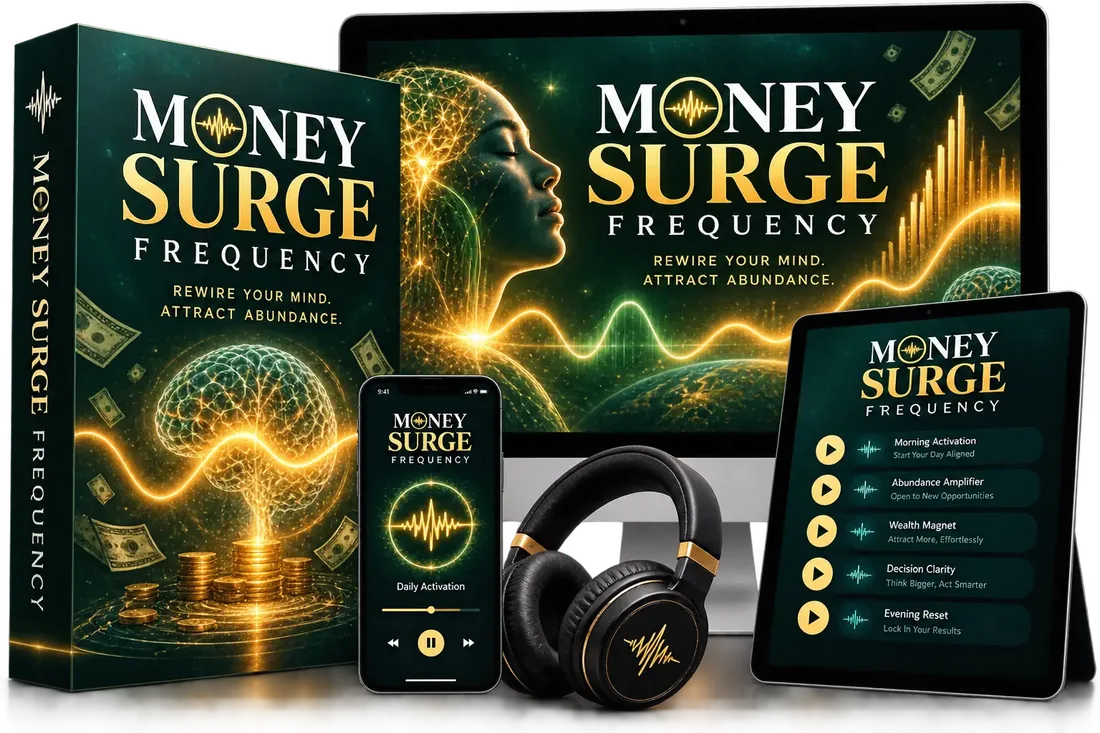 See the $29 Money Surge offer
Every day, millions of people wake up and do the same thing. They reach for their phone, check the news, glance at their bank balance and think about their bills. Before they've brushed their teeth, their mind is already in financial-stress mode.
People who handle money well often seem to live in a different mental world. They're calmer and more focused. They spot opportunities others miss, make confident decisions and stay committed when others give up. Over time, those small differences can add up to very different financial outcomes.
What if a better financial future starts with something ordinary: the state of mind you create in the first few minutes of your day?
That question is at the heart of Money Surge Frequency, a short listening ritual created by a former software engineer named Steve Anderson. His story, as told on the official page, involves a secret research project and a mysterious set of sound recordings.

Could a simple daily ritual help you step out of the everyday money rat race?
Imagine starting each morning by deliberately creating a calm, focused state instead of letting stress set the agenda, and training your attention toward opportunity instead of worry. That's the idea behind Money Surge Frequency.
The creator

According to the official page, Steve spent almost twenty years as a software engineer working on artificial intelligence, cybersecurity and machine learning. When the economy slowed, contracts dried up and he found himself at the kitchen table each night with his wife, deciding which bills could wait.
He describes the hardest part as watching his savings shrink while his wife tried not to look worried. He worked harder than ever, yet felt more exhausted, less confident and quicker to talk himself out of opportunities.
Looking back, he says his biggest problem wasn't only money. It was what constant financial stress had done to his thinking.
“How did I do everything right… and still end up here?”
The turning point
Every morning, Steve says, he promised himself that today would be different. Every evening he came home with the same disappointment and told his wife he was close to something. One night she quietly asked how much longer they could keep going like this.
He kept applying for software roles and kept hearing he was overqualified or too specialised. Then a recruiter called about a company he'd interviewed with weeks before, inviting him back for a final interview.
“Hi Steve. We'd like to invite you back for one final interview.”
The story

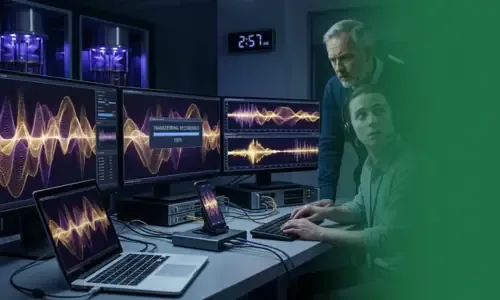
In the official story, the new job turned out to be a highly secured research project. Steve describes a facility hidden beneath the Rocky Mountains, endless security checks and a room of advanced computers running code he couldn't recognise.
His assignment was to work out what the software did. After months of analysis he says he found it was generating thousands of precisely structured sound frequencies. Out of curiosity, he recorded a few of them on his phone.
This is the dramatic part of the sales letter. We can't verify any of it, so read it as the creator's origin story rather than documented fact.
Several weeks later

Steve says he began listening to the recordings in the early morning and late at night. Within a few weeks, he noticed he was waking up clearer, solving problems faster and having new ideas more easily.
He also describes a run of unexpected money in the weeks that followed. The official page presents this as possible coincidence, and so do we: no recording can make money appear, and those events aren't something you should expect.
What had he actually brought home from that laboratory?
The dinner

Steve played one of the recordings for an old college friend, Max, who had become a neuroscience professor. In the story, Max is struck by how precise and structured the sounds are and asks where they came from.
Max later introduces him to a small group of researchers who analyse the files and look at volunteers' brain activity while they listen. They describe consistent, measurable changes in brain activity, though, again, this is part of the creator's narrative rather than published research.
“What we're seeing shouldn't exist.”

Project Resonance

The researchers connect the sounds to an old binder labelled PROJECT RESONANCE, full of notes on acoustics, geometry and ancient architecture, including the pyramids. One of them is careful to say that the pyramid link is speculation.
What they do say is grounded in real science: the brain responds to sound, rhythm and tone; calming audio can change how relaxed we feel; and repeated mental practice can build lasting habits through neuroplasticity.
“Not by magic. By working with the brain's own ability to adapt, learn, focus and respond.”

The real discovery

This is the most important part of the story. The lead researcher tells Steve he doesn't believe the recordings made money appear. What changed, he suggests, was Steve himself.
Steve agrees: he was calmer, slept better, worried less, noticed opportunities he'd usually ignore and actually acted on ideas. When people are less overwhelmed by stress, they tend to think more clearly, follow through more consistently and recover from setbacks faster, and those choices can affect careers and finances over time.
“Maybe the recordings didn't change my money. They changed me.”

What happened next

Steve says friends began asking what he was doing differently, so he shared his daily listening habit. Living-room sessions turned into workshops and then larger events for business owners, teachers, parents, retirees and entrepreneurs.
That's how the Money Surge Frequency program came about: not as a promise of instant money, but as a short daily ritual to quiet mental noise, train attention and help you show up as the person who can build the life you want.
This was never about chasing money. It was about changing the state you make decisions from.
Introducing

It's simple, it's easy and you can do it from home. While other people try to get ahead by working longer hours, taking second jobs, chasing “hot” investments or forcing themselves through complicated manifestation routines, you put on headphones and press play.
No 4am alarm. No hour-long meditation. No complicated visualisation. No repeating affirmations a hundred times in the mirror. Just press play, listen and start the day from a calmer, clearer, more intentional state.

Picture two people walking into the same room. One leaves thinking there was nothing there for them. The other meets someone, gets an idea, spots an opportunity or makes one small decision that changes what happens next. Same room, same people, same opportunity, different result.
Your brain can't consciously take in everything around you; it has to filter. When attention is buried under bills, bad news and old money worries, it's easy to miss what's right in front of you. That's why Money Surge Frequency isn't about telling yourself “I'm going to be rich”. It's about changing how you start your day.
Most people don't notice they're doing it. Eyes open, phone in hand: email, news, bank balance, bills. Before the first coffee, the mind is already reacting to everything that's wrong, and that state follows them all day. Money Surge Frequency offers another option: you create your state first. Calmer. Clearer. More focused. More intentional.

Tomorrow, before the news and before social media, you put on headphones and press play. For a few minutes, your future gets your attention first. You feel calmer about money, think more clearly before decisions, stay focused on opportunities and follow through on ideas you'd normally put off.
A roughly seven-minute daily listening session, delivered digitally so you can play it on your phone, tablet or computer.
Morning and evening audio sessions, a guided visualization and a printable success journal.
No shipping and no waiting: you can start your first session within minutes of ordering.
Refunds are handled by ClickBank, the retailer, for a full year after purchase.
What would it be worth to feel calmer when you think about money, to make decisions with a clearer head and to notice opportunities you'd otherwise overlook? And what has staying stuck already cost you: missed opportunities, decisions put off, nights spent worrying?
The official page notes it could charge far more. Instead, Money Surge Frequency is available for a one-time payment of $29, with instant digital access and a 365-day money-back guarantee.
Today just
$29
One-time payment · instant digital access · includes 4 bonuses (listed value $198)

365-day money-back guarantee. If you're not satisfied, request a refund through ClickBank within 365 days of purchase.
Click the order button and you'll reach the secure ClickBank checkout. Once payment is complete, the full program and bonuses are available straight away. No shipping, no delays.
The moment you decide to start, you can put on headphones and begin your first session. No setup and no learning curve, just seven quiet minutes for a calmer, more focused version of yourself.
Included free today
Order today and you also receive four extra sessions and tools to help you get started and stay consistent.
Bonus #1
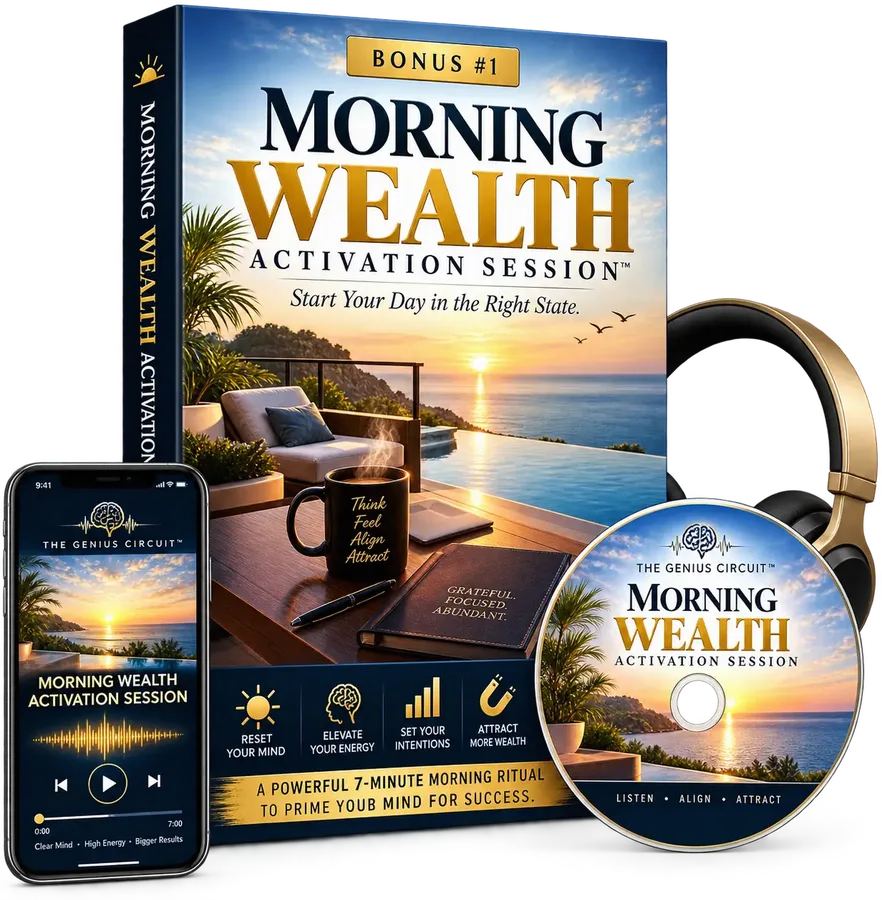
A short guided audio for the first minutes of your day, designed to help you start focused on your goals and opportunities rather than on bills and bad news.
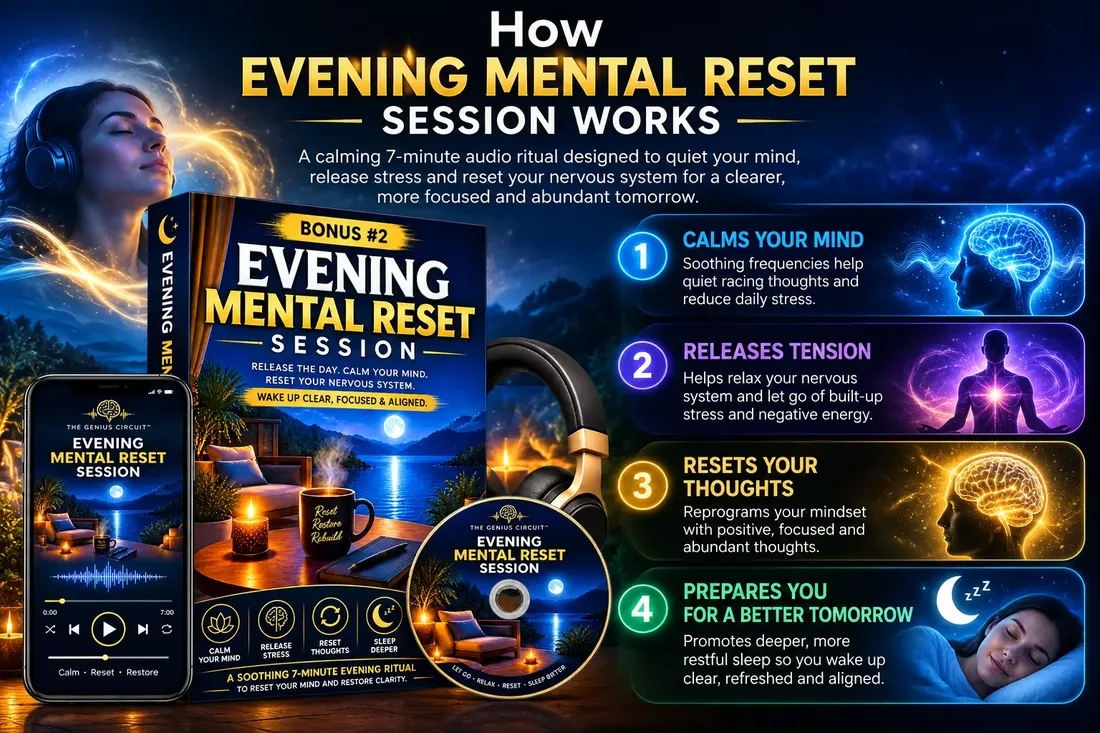
Bonus #2
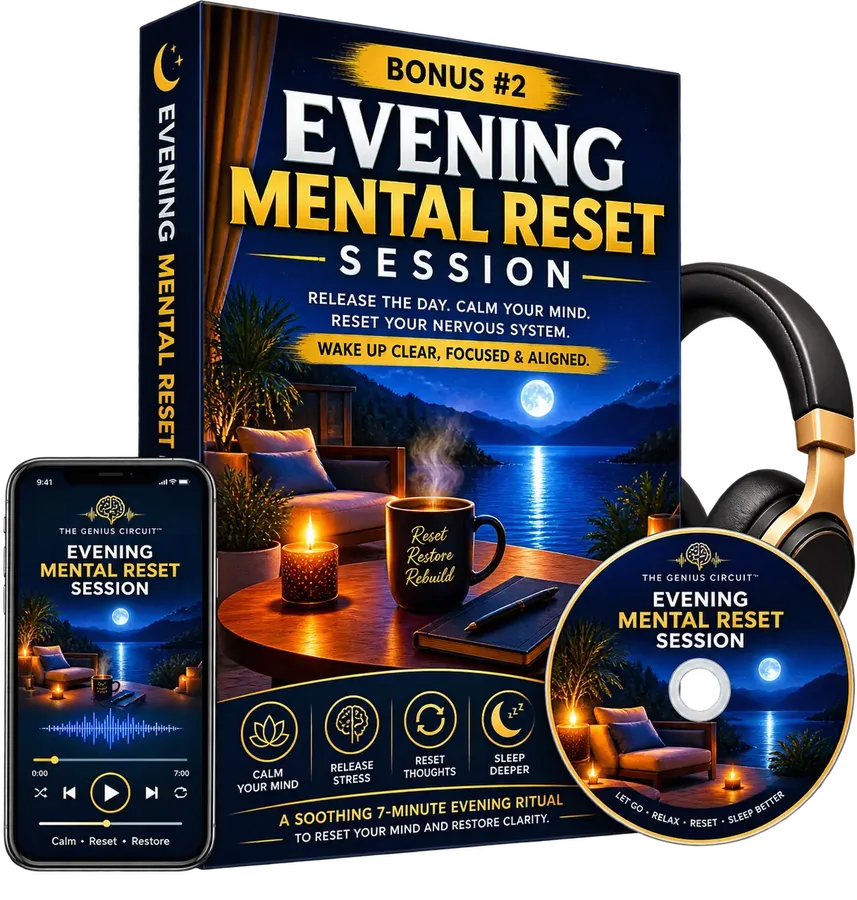
A calming evening session to help you slow racing thoughts, let go of the day's stress and wind down before sleep, so you wake up clearer.
Bonus #3

A guided visualization that walks you through picturing the future you're working toward, to make your goals feel concrete and motivating.
Bonus #4

A simple printable journal to track your daily sessions, record wins and ideas, and keep your financial goals in front of you.
Today just
$29
One-time payment · instant digital access · includes 4 bonuses (listed value $198)
365-day money-back guarantee. If you're not satisfied, request a refund through ClickBank within 365 days of purchase.
The moment your order is complete, everything is available. All you need is about seven quiet minutes and the willingness to show up for yourself.
Somewhere you won't be interrupted for a few minutes.
Headphones or earbuds, whatever is comfortable.
Start the Money Surge Frequency session.
Relax and breathe. There's nothing to memorise or repeat.
Then take one small action toward a financial goal while your mind is clear.
Real change rarely happens overnight. It comes from small actions repeated consistently. Each session is designed to help you slow racing thoughts, reduce mental noise and strengthen habits of focus and intentional thinking.
When you start thinking differently, you often start deciding differently: noticing opportunities, sticking with your goals and responding with confidence instead of stress.
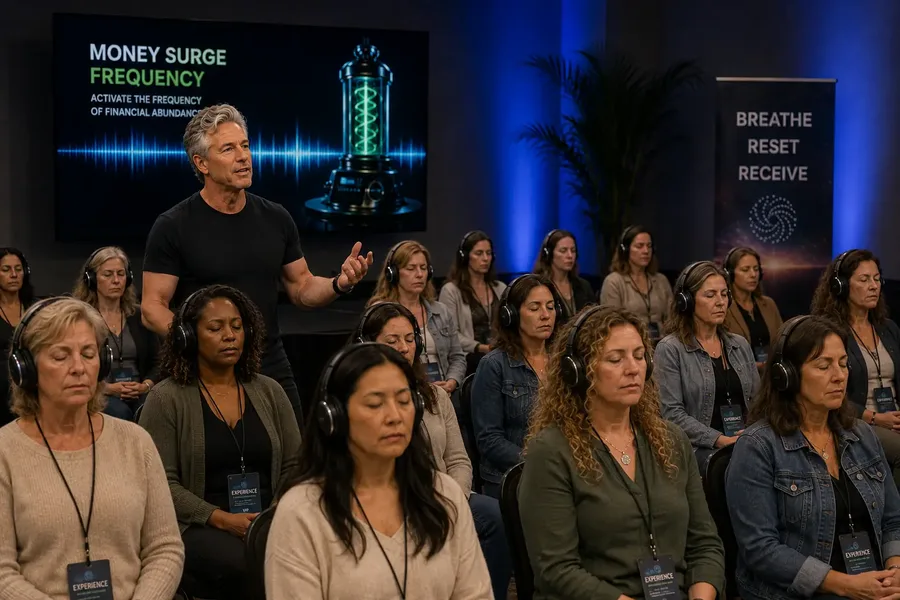

That's what the program calls your “Money Surge moment”: when you realise you're thinking differently, showing up differently and making better decisions each day.
Money Surge Frequency itself hasn't been studied, but its underlying ideas touch on real research.
Research on scarcity suggests that money worries can take up mental bandwidth and make careful decisions harder, which is why calming the mind first can help.
Reviews of music-based interventions find modest reductions in stress for many people. Effects vary, and they're not a substitute for treatment.
Some studies of binaural beats show small effects on anxiety and attention, but results are inconsistent and many studies are small.
Meditation and other mental-training studies show that regular practice can change attention and brain networks over time. Consistency matters more than intensity.
Choice #1
Close this page and tell yourself you'll figure it out later. Keep waking up with the same money worries. If nothing changes, you may be having the same conversation with yourself a year from now.
Choice #2
Start each morning calmer and more focused. When your thinking changes, your actions can change, and when your actions change, your future can start to change too.
Get instant access now
Imagine waking up without that familiar weight of financial pressure. Feeling calmer when unexpected expenses appear, more focused on opportunities, more disciplined with your goals and more confident about where you're heading. Over time, those small shifts can compound.
One small habit. Seven minutes a day.

If you've tried books, videos and manifestation programs before without lasting change, you don't have to rely on hope. Make the sessions part of your routine, then decide. If at any point in the next 365 days you feel Money Surge Frequency wasn't worth it, you can request a full refund through ClickBank.
Today just
$29
One-time payment · instant digital access · includes 4 bonuses (listed value $198)
365-day money-back guarantee. If you're not satisfied, request a refund through ClickBank within 365 days of purchase.
It's a digital audio program: a short daily listening session of about seven minutes, plus four bonus tools, designed to help you start the day calmer and more focused on your financial goals.
No audio program can create money on its own, and you shouldn't expect windfalls. The realistic goal is a calmer, more focused mindset that may help you make better decisions and follow through on your plans.
Immediately after checkout you get digital access to the audio and all bonuses. There's nothing shipped.
The official price is a one-time payment of $29 through ClickBank.
The main offer is a one-time payment. Upsells may be offered after checkout; they're optional, so read each page before clicking.
No. You simply sit back, put on headphones and listen.
Most people listen first thing in the morning. Others prefer the evening. The best time is the one you'll stick with.
Everyone's different. Some people feel calmer within a few sessions; for others it's gradual. Daily consistency matters most.
Yes. It works on smartphones, tablets, laptops and desktops.
Don't listen to relaxation audio while driving or doing anything that needs your full attention.
Yes. The seller offers a 365-day money-back guarantee, processed through ClickBank.
No. It's a personal-development audio. For debt, investing or mental health concerns, speak to a qualified professional.
Money Mindset
Money worries don't just feel bad. Research suggests they can take up mental bandwidth and make good decisions harder.
Daily Habits
How you start the morning shapes the rest of the day. Here's a short routine to begin from calm rather than panic.
 Sound & Science
“Brain frequency” audio is popular, but what does the research actually say?
Scientific references
These studies relate to financial stress, relaxing audio, binaural beats and meditation in general. None of them tested Money Surge Frequency.